
The China–Iran Security Axis
Inside the Infrastructure That Silenced a Nation

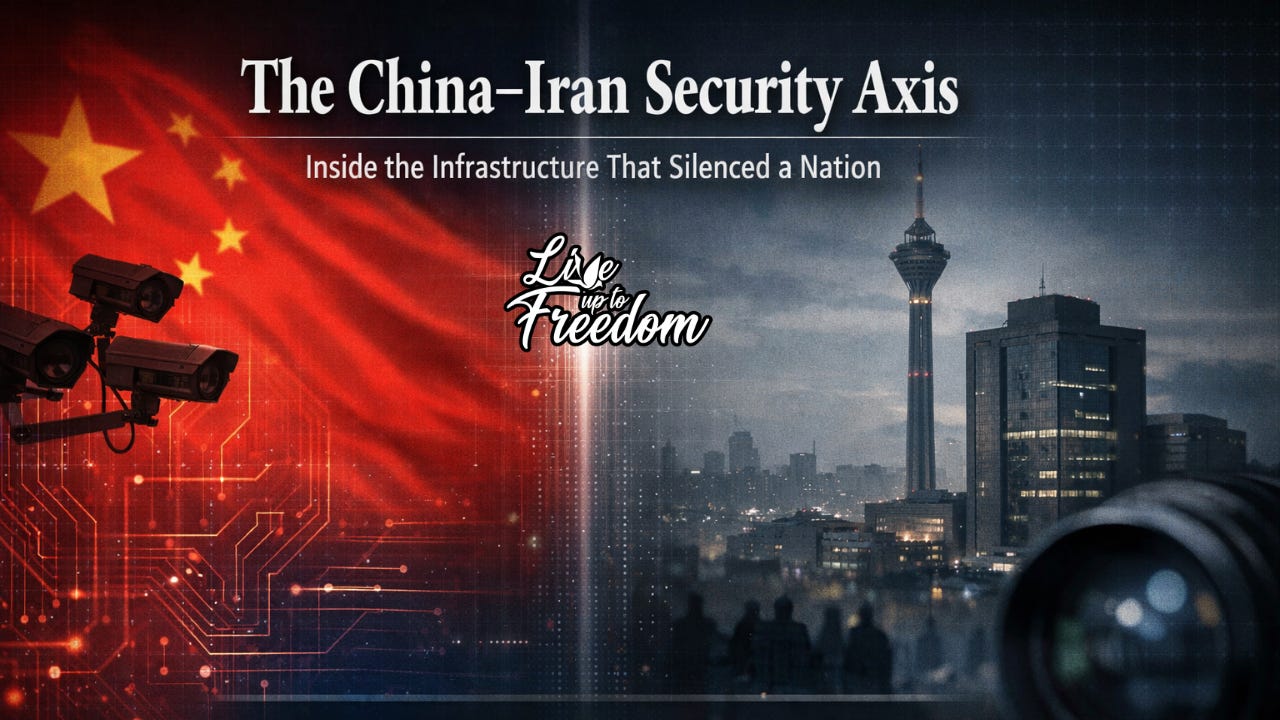
Iran’s protest suppression is no longer a purely domestic operation. It is now reinforced by Chinese technology, security doctrine, and training infrastructure.
Recent reporting by Ilya Jazayeri for Radio Farda documents how equipment from Chinese firms, including Huawei and other surveillance manufacturers, has been integrated into Iran’s internet control systems and nationwide monitoring networks. During Iran’s 2026 revolution, internet traffic was centrally managed, satellite connectivity was heavily disrupted, and surveillance systems were activated at scale. These capabilities were not improvised in response to unrest; they were constructed in advance.
This matters because it demonstrates something larger than cooperation between two governments. It shows the transfer of a functioning authoritarian security model. China has developed a system that prioritizes regime stability above civil liberty and integrates digital infrastructure directly into state control. Iran is applying that model.
When surveillance architecture becomes exportable and politically aligned regimes share doctrine and tools, repression becomes more durable. What was tested in Tehran will not remain confined there if it proves effective.
